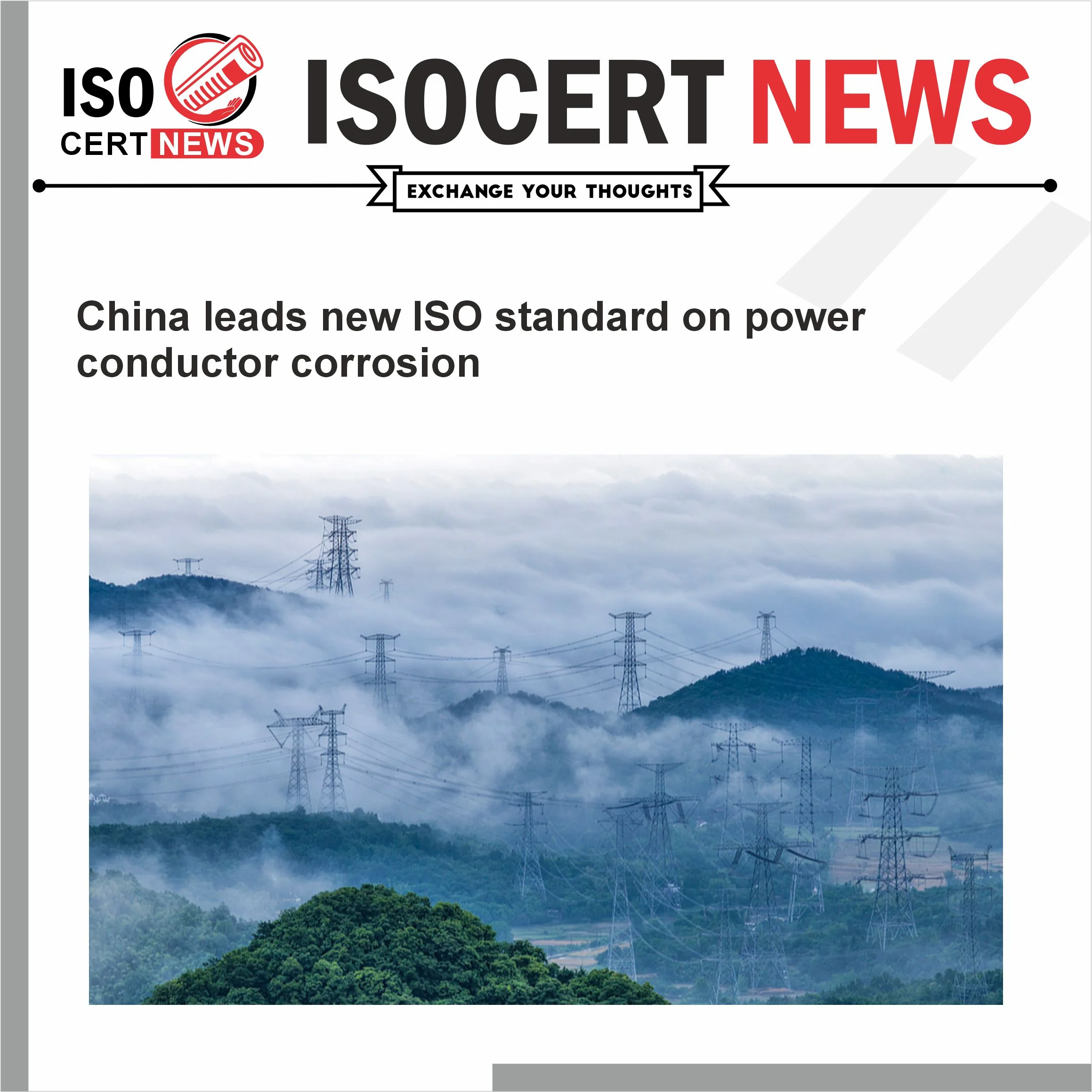
China has taken the lead in developing a new international standard for corrosion testing of conductive materials used in power transmission systems. The new standard is expected to improve the safety, reliability, and long-term performance of power grids across the world. It will help power companies better evaluate how conductive materials perform under harsh environmental conditions and reduce the risk of equipment failure. This development also highlights China’s growing role in shaping global standards for advanced energy infrastructure and grid technology.
The standard, titled “Corrosion of metals and alloys – Testing methods for corrosion of conducting alloys in AC electric current condition,” was officially published by the International Organization for Standardization (ISO) recently.
Power transmission and distribution lines around the world now extend beyond 80 million kilometers. Conductive materials such as copper, aluminum and their alloys play a major role in transmission cables and related hardware. During live operation, these materials are constantly exposed to alternating current, changing electromagnetic fields and atmospheric corrosion. Over time, these factors can work together to speed up material wear and degradation, which may affect the performance and reliability of power systems.
Corrosion has become a serious concern for grid operators in coastal and highly industrialized areas. Harsh environmental conditions in these regions can damage conductor materials over time and affect the reliability of power infrastructure. More than 30% of overheating and conductor fracture incidents are directly connected to corrosion. This makes corrosion one of the biggest threats to the long-term safety, stability, and performance of power transmission systems.
The standard defines seven key parameters that are essential for accurate corrosion testing. These include the type of power supply, output power, sample size, surface treatment methods, circuit setup, testing duration, and temperature conditions.
The system recreates the electromagnetic field conditions found in transmission conductors operating at 50 or 60 hertz. This allows researchers and engineers to study corrosion behaviour in a more realistic environment. It also helps improve the accuracy of corrosion rate measurements and supports better evaluation of long-term conductor performance.
The standard is expected to improve the accuracy of corrosion prediction and help organizations develop more effective anti-corrosion strategies for transmission equipment. It will also support better assessment of equipment service life and long-term performance. By improving maintenance planning and reducing unnecessary repairs, the standard could lower maintenance and operational costs by more than 10%.
The release of the standard reflects the growing global recognition of China’s expertise in corrosion testing for power conductor materials. It highlights the country’s strong technical capabilities and its increasing role in shaping international standards in the energy sector.
The standard is also expected to support the growth of emerging industries such as advanced materials and smart power grids. In addition, it will help improve the safety, stability, and long-term reliability of energy infrastructure around the world.
Source link: https://news.cgtn.com/news/2026-05-20/China-leads-new-ISO-standard-on-power-conductor-corrosion-1Nite6UkYOk/p.html