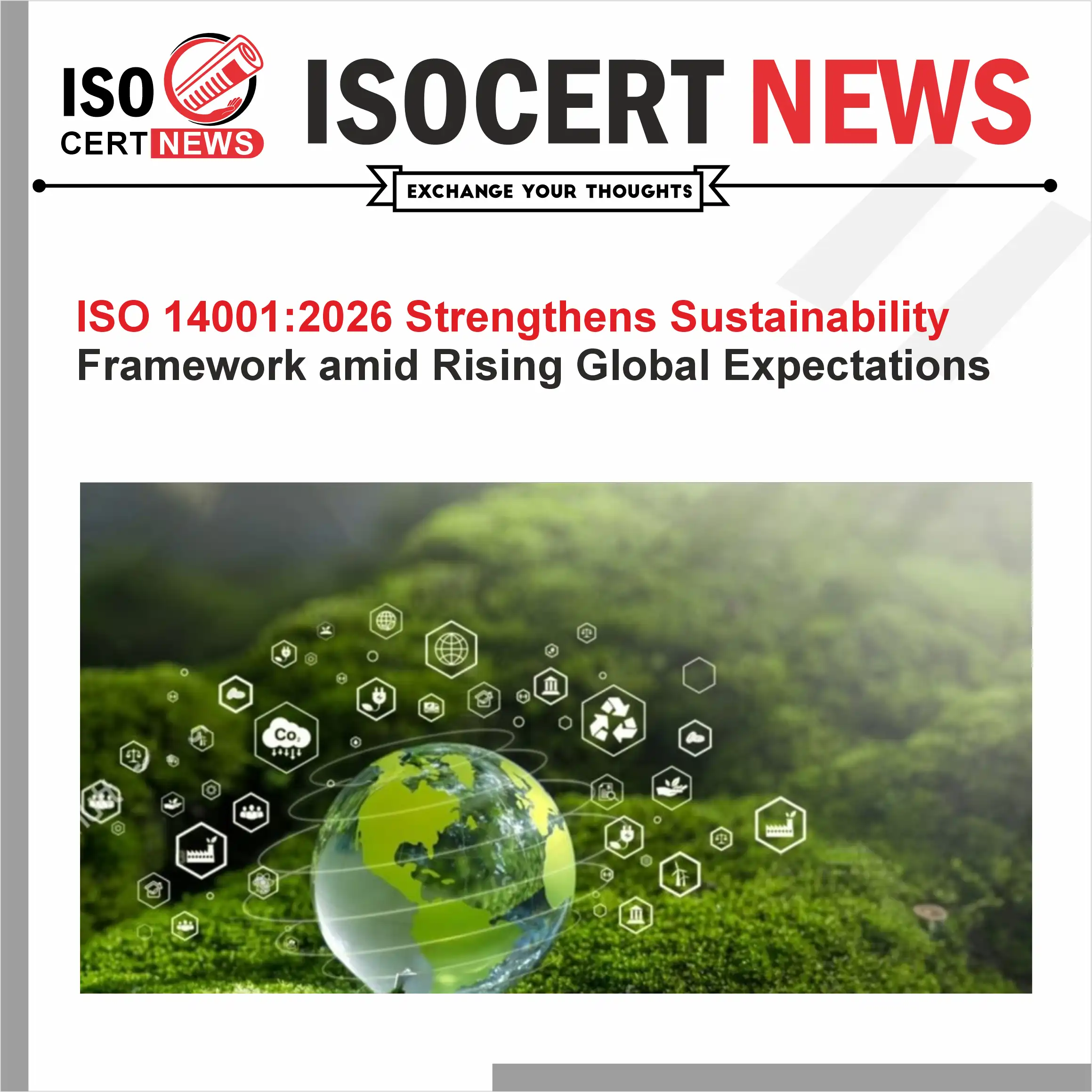
As environmental expectations continue to rise globally, the updated ISO 14001 standard introduces a stronger framework to help organisations align sustainability with long-term growth and resilience. New research highlights that ISO 14001 is among the most widely adopted management system standards. It is linked to a significant reduction in greenhouse gas (GHG) emissions.
The research showed a 0.14% decrease in GHG per unit of GDP, with a 1% increase in ISO 14001 adoption, reinforcing the trust and benefits of the ISO 14000 family and affirming the relevance of the new edition, which was launched by ISO on April 15th.
ISO 14001 has been adopted by more than 6, 70,000 organizations globally. With the release of ISO 14001:2026, the structure has been further aligned with current environmental priorities, which include biodiversity and climate change.
ISO General Secretary Sergio Mujica emphasized the tangible benefits for organizations in terms of environmental performance, cost reduction, and compliance, resulting in positive impacts on the environment. He quoted ‘The new edition of ISO 14001 is smoother to implement and integrates seamlessly with other ISO management systems standards, making it easier for organizations of all sizes to embed environmental management into their strategy, achieve tangible results and demonstrate real impact.’
‘We are encouraged by the findings of this new research and excited to launch the new edition of ISO 14001 – a trusted standard, renewed for today, helping organizations everywhere continue to turn environmental commitment into performance, resilience and lasting value.’
Chief executive of BSI, Susan Taylor Martin, said: ‘Thirty years ago, ISO 14001 redefined how organizations approach environmental responsibility. BSI is proud to have played a leading role in its original creation. Since then, it has provided a shared global framework, enabling hundreds of thousands of organizations to manage their environmental impact in a structured, credible, and measurable way.’ She further added ‘As environmental risks become more complex and interconnected, and expectations for transparency and accountability continue to rise, this latest revision represents far more than a routine update. It is a major step forward, strengthening governance, enhancing resilience, and aligning with emerging priorities such as climate change, biodiversity, and natural capital. It will equip organizations with the tools to embed environmental thinking into strategy, demonstrate real accountability, and deliver measurable impact to support the transition to a fair society and a sustainable world.’
The framework also strengthens the quality and credibility of their sustainability disclosures. Taking a holistic approach to environmental management allows ISO 14001 to go one step further, beyond climate control, helping organizations deliver meaningful and measurable improvements.
By transitioning to ISO 14001:2026, organizations can ensure they remain at the forefront of credible, effective, and globally recognized environmental management. The updated standard makes environmental responsibility more accessible for organizations of all sizes, while also supporting more transparent and consistent reporting aligned with evolving stakeholder and regulatory expectations.
Link – Updated ISO 14001 environmental standard launched | Agg-Net